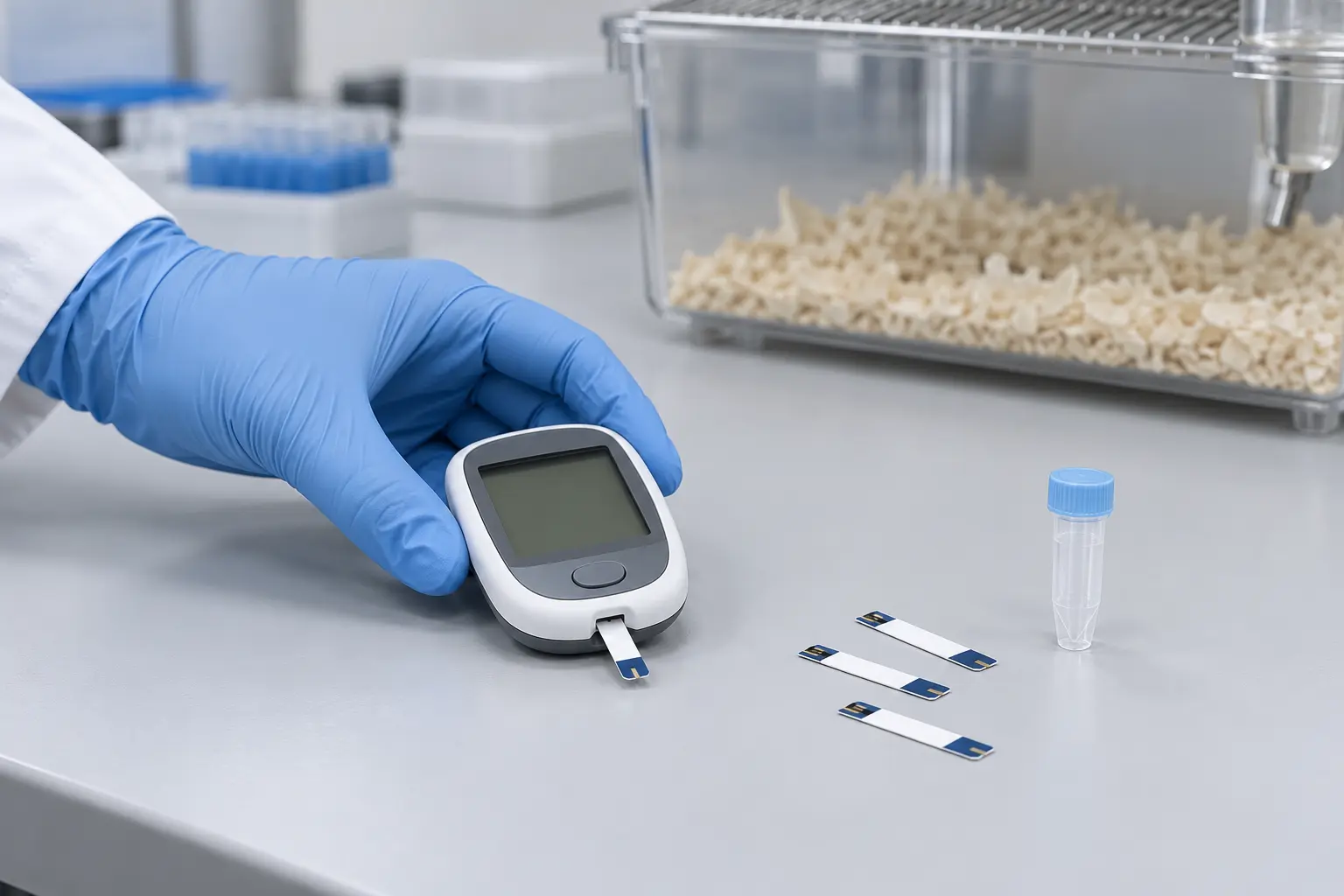
Tolerance tests characterise how mice regulate blood glucose in response to a metabolic challenge. They help researchers assess how diet, genetic changes or treatments affect glucose homeostasis, providing functional information relevant to obesity, diabetes and other metabolic conditions.
Glucose tolerance tests measure the response to a glucose load, while insulin tolerance tests assess the blood glucose response to administered insulin. These complementary approaches help characterise metabolic phenotypes and evaluate responses to experimental interventions.
We help you select the challenge, administration route and sampling schedule for your research question. Tests involve administration of the test substance and blood sampling.
- Glucose, insulin and pyruvate tolerance tests
- Test substance administration and blood sampling
M.Nixon@ed.ac.uk
What we measure
- Blood glucose response to glucose administration (GTT)
- Blood glucose response to administered insulin (ITT)
- Blood glucose response to pyruvate (PTT)
- Additional blood sampling where agreed for downstream analysis
Planning your study
Discuss fasting duration, time of day, administration route, dose, body composition and handling. Agree the sampling schedule and welfare monitoring before starting.
Read the methodological guidance Study planning and access